
Locking In Profits NBA Prop Cash Out Strategy
 Available in US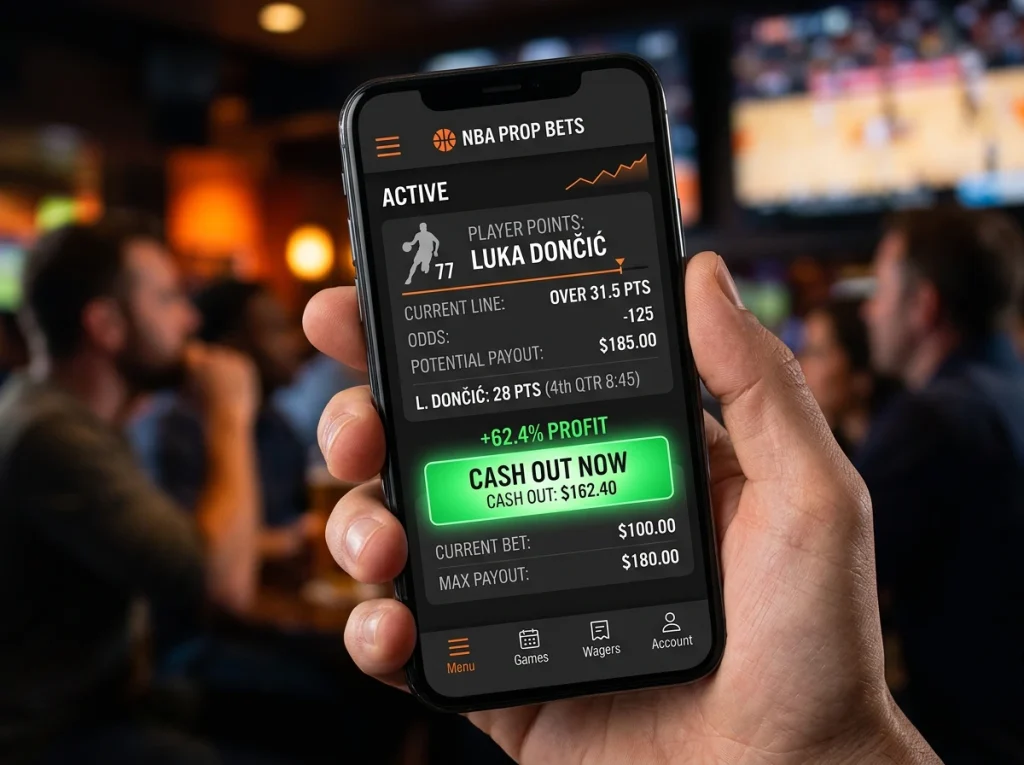
The cash out button sits there glowing after your player scores 18 points in the first half on an over 24.5 prop. The bookmaker offers you 70% of your potential winnings right now, guaranteed. Your gut says take the money. Your brain says the math probably favours letting it ride. This tension defines one of the most debated decisions in modern sports betting.
Cash out functionality has transformed how bettors interact with their positions. What was once a binary outcome – win or lose at settlement – now involves continuous decision-making throughout games. UK bookmakers offer cash out on most NBA player props, creating opportunities for sophisticated position management alongside traps for impulsive bettors.
This guide examines when cash out makes mathematical sense, when it destroys value, and how to develop a disciplined approach to this powerful but dangerous feature.
UK Bookmaker Cash Out Pricing Mechanics
Cash out offers reflect the bookmaker’s current assessment of your bet’s value, minus their margin. If your bet has become more likely to win since placement, the cash out offer exceeds your original stake. If it has become less likely, the offer falls below your stake. The bookmaker always takes a cut – you will never receive true fair value at cash out.
The margin on cash out typically runs 5-10%, meaning the offered value is 5-10% worse than mathematically fair. On a bet originally placed at £10 to win £20, if true current value is £15, the cash out offer might be £13.50-14.25. This margin is how bookmakers profit from the feature.
Live game events trigger rapid cash out value changes. When your player picks up their fourth foul, the cash out on their over prop drops dramatically within seconds. When they hit consecutive threes after a slow start, the offer spikes upward. These real-time adjustments create both opportunity and pressure.
Not all bets qualify for cash out. Complex parlays, certain promotional bets, and bets placed close to final settlement may have cash out suspended. Check availability before assuming you can exit a position mid-game.
When Cash Out Makes Sense
Information changes that shift your probability assessment justify reconsidering positions. If you bet a player over based on expected 34 minutes and learn mid-game they are being load-managed to 26 minutes, the prop value has fundamentally changed. Cash out might lock in partial value on a bet that no longer meets your original thesis.
Blowout developments create cash out scenarios. Your player over looked great through three quarters, but the game became lopsided and starters are exiting. Cash out captures value before garbage time bench deployment eliminates your player’s remaining opportunities.
Injury concerns during games warrant consideration. A player who tweaks their ankle and grimaces but stays in might leave later. If you assess elevated exit risk, securing partial profit protects against complete loss if they cannot continue.
Bankroll management occasionally argues for cash out regardless of mathematical optimality. If a single bet represents outsized exposure and you can lock in meaningful profit, reducing risk has value beyond pure expected return. This applies particularly to parlays where one remaining leg could swing large amounts.
Promotional cash out offers sometimes exceed normal value. Bookmakers occasionally run “enhanced cash out” promotions that reduce their margin. These offers can create positive expected value cash outs that normal pricing would not justify.
When to Let It Ride
Most cash out offers destroy expected value. The bookmaker’s margin ensures you are accepting worse than fair odds for exiting your position. Unless circumstances have changed meaningfully from your original analysis, letting bets run to completion maximises long-term returns.
Emotional reactions to game flow should not drive cash out decisions. Seeing your player start slow creates anxiety, but early performance often regresses toward expectations as the game continues. Panic cash outs after bad first quarters systematically sacrifice value.
Partial wins feel psychologically satisfying but mathematically underperform. Taking 60% guaranteed instead of 100% potential when your bet is ahead creates long-term drag on results. The good feelings from “smart” cash outs mask the value destruction underneath.
Trailing positions rarely warrant cash out. If your bet is behind – player on pace for under rather than over – the cash out offer typically returns a tiny fraction of your stake. Taking £2 back on a £10 bet surrenders the remaining equity your position still holds. Unlikely comebacks do happen.
High-variance outcomes argue against early exit. If your player needs a big fourth quarter to hit their prop, that outcome has equity. Cash out eliminates the upside scenarios while guaranteeing a partial loss. Let the variance play out unless new information changes your assessment.
Frequently Asked Questions
Is cash out generally worth taking on NBA props?
Usually not. The bookmaker"s margin on cash out offers (5-10% below fair value) means most cash outs destroy expected value. Only take cash out when new information fundamentally changes your original betting thesis or when specific bankroll management needs override mathematical optimality.
How do I know if a cash out offer is fair?
Compare the offer to your assessment of current true probability. If your player has 70% chance of hitting after first half and fair value would be £17, but cash out offers £14, you are surrendering significant edge. The bookmaker"s offer always includes their margin.
Should I cash out when my bet is winning to lock in profit?
Resisting this urge is important for long-term profitability. Partial wins feel satisfying but accepting 60-70% of potential value repeatedly compounds into substantial opportunity cost. Only cash out winners when circumstances have changed, not simply because profit exists.
Developing Cash Out Discipline
Create rules before situations arise. Decide in advance what circumstances justify cash out consideration – injury, major minutes change, blowout development. Having predetermined criteria prevents emotional decision-making during tense game moments when clear thinking becomes difficult.
Track your cash out decisions and their outcomes. Record what you cashed out, what you would have won or lost without cashing, and why you made the decision. This data reveals whether your cash out instincts improve or destroy value over time. Most bettors discover their instincts were worse than they believed.
Consider hiding cash out from your interface if available. Some bettors find the constant temptation undermines discipline. If you know cash out availability leads you toward poor decisions, removing the option simplifies your betting life and protects your bankroll from impulsive choices.
Accept that some non-cashed bets will lose. The sting of watching a position collapse after declining cash out is painful but expected. If your process was sound – the cash out did not offer fair value and no new information justified exiting – the loss was correct despite the outcome. Process over results defines successful betting.
Review your cash out history quarterly to assess whether your decision framework needs adjustment. Perhaps you discover that injury-related cash outs consistently preserved value while other scenarios did not. This pattern recognition helps you refine which situations genuinely warrant cash out consideration and which represent false alarms driven by anxiety rather than analysis.
Remember that every cash out decision reveals something about your risk tolerance and emotional state. If you find yourself constantly tempted to cash out even small profits, that pattern suggests discomfort with variance that might indicate your stake sizes are too large for your actual risk tolerance. Use cash out behaviour as diagnostic feedback for broader betting approach adjustments.
