
Performance Tracking NBA Prop Betting Records
 Available in US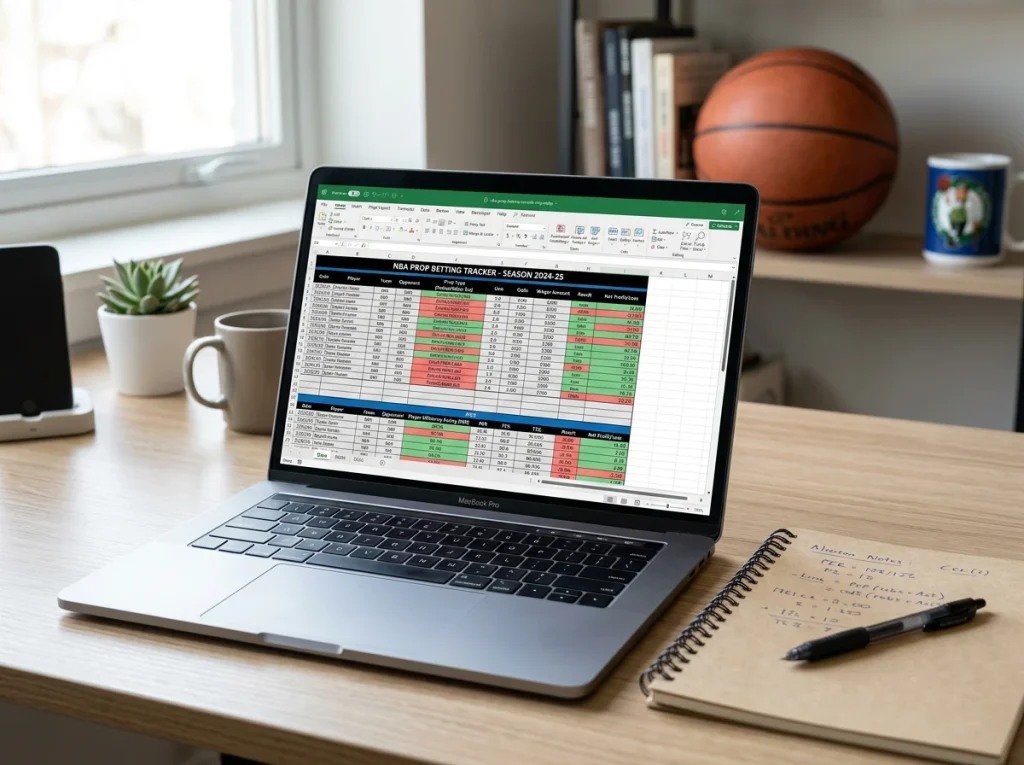
The bettors who improve fastest are not those who make the best initial picks – they are those who track their decisions systematically and learn from the data. Without records, you are operating blind, unable to distinguish genuine edge from lucky streaks or identify the leaks that drain your bankroll over time.
I resisted proper record-keeping for my first two seasons of prop betting. It felt tedious, and I convinced myself I could remember what worked. Looking back, those two seasons of untracked betting probably cost me thousands in unidentified mistakes. Once I started tracking seriously, improvement accelerated dramatically because I could finally see what I was actually doing rather than what I thought I was doing.
This guide explains what to track, how to organise your records, and how to extract actionable insights from your betting data.
Essential NBA Prop Betting Data Metrics
Every bet needs basic identification: date, player, prop type, line, odds, stake, and outcome. This foundation enables all subsequent analysis. Miss any element and your records become incomplete, limiting what you can learn from them.
Capture the reasoning behind each bet, not just the bet itself. Why did you take this prop? What factors drove your confidence? Recording your thesis at placement time prevents hindsight bias when reviewing results. You can see what you actually thought, not what you later convinced yourself you thought.
Track closing lines alongside your bet lines. The difference between these figures – your closing line value – measures skill more reliably than outcomes over short samples. Recording closing lines requires extra effort but provides irreplaceable insight into whether you are actually beating the market.
Note contextual factors that might affect your analysis. Was this a back-to-back? Were key teammates out? Did you have strong conviction or marginal edge? These context tags enable segmented analysis that reveals where your process works and where it fails.
Record the bookmaker used for each bet. Over time, this data reveals which operators offer consistently better prices on which prop types. It also helps track any account restrictions that affect your betting options.
Organising Your Tracking System
Spreadsheets work well for most bettors. Excel or Google Sheets provide sufficient functionality without requiring technical expertise. Create a template with columns for all essential data points, then copy that template for each new betting period. Starting with good structure prevents reorganisation headaches later.
Organise by time periods that match your review rhythm. Monthly sheets work for most bettors – short enough to identify issues quickly, long enough to accumulate meaningful samples. Within each sheet, sort chronologically so you can see how decisions evolved through the period and identify any drift in your process.
Create summary sections that calculate key metrics automatically. Win rate, ROI, units won/lost, CLV averages – formula-driven summaries update as you add data, giving you real-time performance visibility without manual calculation. Automated summaries encourage frequent checking by removing friction.
Build separate tabs or sheets for different bet types. Points props might perform differently than assists props in your betting. Separating these categories lets you analyse each independently rather than muddying patterns with aggregated data. Granular organisation enables granular insight.
Back up your data religiously. Cloud storage through Google Sheets provides automatic backup. If using local Excel files, establish a backup routine. Losing betting records to a computer crash is preventable and devastating. Treat your records as valuable assets worth protecting.
Analysing Your Records
Review records weekly for immediate feedback. Look for obvious errors, streaks that might indicate changing conditions, and bets where your recorded reasoning was flawed. Weekly reviews catch problems before they compound.
Conduct deeper monthly analysis examining patterns across larger samples. Which prop types show positive ROI? Which players do you assess well versus poorly? Are there situational factors where your edge concentrates or disappears? These pattern insights inform strategic adjustments.
Compare your assessed probabilities to actual outcomes. If you consistently rate props as 58% probability but they hit only 51%, your assessments are calibrated too high. This calibration analysis reveals systematic biases that simple win/loss tracking misses.
Examine your CLV trends over time. Are you consistently beating closing lines, or does your CLV fluctuate unpredictably? Persistent positive CLV indicates genuine skill; negative or random CLV suggests your edge may be illusory.
Look for correlation between confidence levels and outcomes. Do your high-confidence bets actually perform better? If not, your confidence calibration needs work. If so, consider adjusting stake sizing to bet more on high-conviction plays.
Frequently Asked Questions
What is the minimum data I should track for NBA props?
At minimum: date, player, prop type, line, odds, stake, and outcome. Additionally tracking your reasoning, closing line, and contextual factors substantially improves the insights available from your records. More data enables better analysis.
How often should I review my betting records?
Weekly reviews catch immediate issues and reinforce good habits. Monthly deep-dives examine patterns across meaningful samples. Quarterly reviews assess overall strategy and identify needed adjustments. Multiple review cadences serve different purposes.
What metrics matter most for evaluating prop betting performance?
ROI measures overall profitability. Closing line value measures skill independent of variance. Win rate matters less than these metrics because it ignores odds. Track all three but weight CLV and ROI more heavily than raw win percentage.
Building the Tracking Habit
Start tracking immediately, even if your system is imperfect. An incomplete record provides more insight than no record. You can refine your tracking approach over time; you cannot retroactively create data you did not collect. Begin with basic fields and expand as you learn what information proves most valuable.
Make recording part of your betting routine. Enter each bet immediately after placement rather than batching entries later. Immediate recording captures your actual reasoning; delayed recording invites memory distortion. The few seconds per bet saves hours of trying to reconstruct decisions later.
Set calendar reminders for review sessions. Without scheduled reviews, records accumulate without generating insights. The tracking itself is worthless – value comes from analysing what you have tracked and acting on findings. Build review time into your weekly schedule as a non-negotiable commitment.
Share your tracking approach with other serious bettors. Discussing methodology reveals improvements you might not discover alone. The betting community includes many experienced record-keepers willing to share what works for them. Learning from others’ systems accelerates your own development.
Back up your records regularly and redundantly. Cloud storage provides automatic backup for spreadsheet users. Export copies monthly to ensure you never lose accumulated data to technical failure. Years of betting records represent irreplaceable intellectual property worth protecting.
Evolve your tracking system as your betting sophistication grows. Beginner tracking needs differ from advanced analytical requirements. What starts as basic win/loss recording should eventually incorporate CLV tracking, contextual tags, and probability calibration analysis. Let your system grow with your skills rather than outgrowing a static approach.
Treat your betting records as a long-term asset that compounds in value. Each season of data adds to patterns that become visible only over time. Bettors who track consistently for years develop insights unavailable to those who track sporadically or not at all. The tracking habit is an investment in future analytical capability.
