
Best Player Prop Bets NBA: UK Punter's Complete Guide 2026
 Available in US
Last Tuesday night, I watched LeBron James log exactly 33 minutes against the Clippers and finish with 27 points – one shy of his over line. The difference between a winning ticket and a losing one came down to a single bucket in garbage time that never materialised. That's the beauty and the frustration of finding the best player prop bets NBA markets have to offer. You can do everything right and still sweat the final seconds.
I've been analysing NBA props for eight years now, and the landscape has never been more exciting for UK punters. A typical game night during the 2025-26 season features 150 to 250 player prop markets across a single slate. With up to 15 games running per day and 82 games per team across the regular season, we're looking at well over 1,000 daily prop betting opportunities across all markets. That's not noise – that's opportunity, if you know where to look.
Here's what most American betting guides won't tell you: they're not written for us. Every US-focused resource assumes you're using DraftKings, FanDuel, or BetMGM. They display American odds exclusively. They don't mention bet365, Betfair, or William Hill – the bookmakers British punters actually use. And they have zero understanding of UK gambling regulation, UKGC licensing, or how the recent Remote Gaming Duty changes affect the odds you're getting.
This guide changes that. I've built it specifically for UK-based bettors who want to find genuine value in NBA player props without having to mentally convert -110 to fractional odds every time they read an analysis. We'll cover everything from the basic mechanics of how props work to advanced strategies for identifying edges. I'll walk you through the different prop types, explain which UK bookmakers offer the best markets, break down odds formats properly, and show you how to think about expected value the way professional bettors do.
Whether you're completely new to NBA props or you've been dabbling for a while and want to sharpen your approach, this is the comprehensive resource that treats the UK market as the priority, not an afterthought.
Five Things That Will Shape Your NBA Prop Betting
- The UK sports betting market generates £16.8 billion in gross gambling yield annually – and basketball is a growth category, meaning more markets and better liquidity for prop bettors
- NBA is the gold standard for prop betting due to its 82-game season with multiple games daily – no other major sport offers this volume of quality betting opportunities
- Minutes played correlates directly with statistical output – starters typically log 32-36 minutes per game, and understanding rotation patterns is the single most important edge factor
- UK-licensed bookmakers like bet365 and Betfair offer extensive prop coverage with fractional odds displays, cashout features, and regulated consumer protections that American books can't match
- Player props are less efficiently priced than game lines, creating genuine value opportunities – but this also means higher bookmaker hold on exotic markets like steals and blocks
Types of NBA Player Prop Bets Available to UK Punters
When I first started betting NBA props back in 2018, the options were limited. Points, maybe rebounds if you were lucky. Fast forward to the 2025-26 season, and my Betfair account shows more than 50 different prop types for a single primetime game. The market has exploded, but not all props are created equal.
Understanding the hierarchy of prop markets matters because it directly affects the value you can extract. The points market is priced much tighter than lower-volume blocks and steals markets – a recurring pattern that creates both opportunities and traps for the unwary bettor. Let me break down what's actually available.
| Category | Prop Types | Typical Lines | Market Efficiency |
|---|---|---|---|
| Primary | Points, Rebounds, Assists | Stars: 25+ pts, 8+ reb, 7+ ast | High – tighter spreads |
| Secondary | Steals, Blocks, Threes Made | Usually 0.5-3.5 range | Lower – wider margins |
| Combination | PRA, P+R, P+A, R+A | Stars: 35-50+ combined | Medium – depends on player |
| Milestone | Double-Double, Triple-Double | Yes/No markets | Variable – player-specific |
Primary Markets: Points, Rebounds, Assists
Points props are where most of the money flows, and for good reason. Scoring is the most consistent statistical output in basketball – a 25-point scorer doesn't randomly put up 8 points on any given night barring injury or foul trouble. This consistency makes points props easier to project, which is why bookmakers price them so tightly.
Rebounds show more variability depending on game flow. A blowout means starters sit early, killing rebounding opportunities. Close games that go to overtime can push rebounding totals well past projections. I pay close attention to pace-of-play matchups here – two fast teams means more possessions, more shots, more potential misses, and more rebounds.
Assists are the trickiest of the primary markets. They depend not just on the player's passing ability but on teammates converting those passes into made baskets. A point guard who typically dishes 10 assists might struggle against a stingy defence that forces contested shots. Conversely, facing a poor defensive team often boosts assist totals across the board.
For UK punters, primary markets offer the best liquidity and the smallest edge to the bookmaker. But that cuts both ways – the lines are sharp, and finding genuine value requires proper analysis.
Secondary Markets: Steals, Blocks, Threes
Here's where things get interesting – and where I've found some of my best edges over the years. Exotic props on steals, blocks, and three-pointers carry higher bookmaker hold than primary markets. As one analyst put it, the less efficient the market, the higher the bookmaker's edge. That sounds like a reason to avoid these markets, but the reality is more nuanced.
Yes, the vig is higher on steals and blocks props. But these markets also attract less sharp action, meaning the lines can be softer. A bookmaker might spend considerable resources ensuring their LeBron James points line is razor-sharp, but the Robert Williams III blocks prop? That's getting less scrutiny.
Three-point props have become increasingly popular with the league's shooting explosion. But be warned – three-point shooting is inherently volatile. A sniper who normally hits 40% from deep might go 1-for-8 on a given night purely due to variance. I approach threes props with smaller stakes and focus on volume shooters who take enough attempts to normalise the variance.
The steals market is particularly matchup-dependent. Active hands players facing turnover-prone point guards present obvious opportunities. I keep a running list of guards who cough up the ball frequently – it's proven consistently profitable.
Combo Markets: PRA, Double-Doubles, Milestones
PRA – points plus rebounds plus assists – has become the darling of the NBA prop betting world. The logic is sound: combining three statistical categories reduces the variance of any single category. If your player has a quiet scoring night but grabs extra boards, the combined number might still land.
The double-double market fascinates me because it's so player-specific. Nikola Jokić hits double-doubles in roughly 75% of his games – that's an industry benchmark. Betting "Yes" on Jokić to record a double-double isn't some revelation; the price reflects that reality. The value lies in identifying players whose double-double rates are underestimated by the market.
Triple-doubles are lottery tickets. Even the most all-around players – your Jokićs, your Dončićs – hit triple-doubles in maybe 15-20% of games. The prices rarely offer true value, but they're entertaining for small-stakes punters who enjoy the sweat.
I use PRA props most frequently when I have conviction about a player's overall involvement in a game but less certainty about which specific stat category will pop. It's a useful tool for managing variance – a concept we'll explore much more deeply in the strategy section.
UK Bookmakers for NBA Player Props: Where to Bet
I remember the frustration of reading American betting content for years before realising it simply wasn't relevant to my situation. DraftKings odds comparison? Useless – they don't operate in the UK. FanDuel promotions? Can't access them. Meanwhile, I was sitting on accounts with bet365, Betfair, and William Hill wondering which one actually offered the best NBA prop coverage.
That £16.8 billion UK sports betting market I mentioned earlier? It's one of the most competitive betting environments in the world, and that competition benefits punters directly. Flutter Entertainment alone posted group revenue of $15.91 billion in 2025, up 17% from the previous year – and a significant chunk of that came from their UK brands expanding prop market offerings.
When it comes to NBA player props specifically, one name consistently surfaces in my research and personal experience: Betfair has established itself as the go-to site for NBA player prop betting, with numerous prop markets, combo bets, and alternatives. If you cannot find a player prop bet there, it likely doesn't exist. That's not marketing speak – it's the practical reality I've found over thousands of bets.
But Betfair isn't necessarily right for everyone. Let me break down what each major UK bookmaker brings to the table.
| Bookmaker | Prop Market Depth | Live Props | Bet Builder | Cashout |
|---|---|---|---|---|
| bet365 | Extensive | Yes | Yes | Full and Partial |
| Betfair Sportsbook | Market-leading | Yes | Yes | Yes |
| Betfair Exchange | Limited props | Yes | No | No |
| William Hill | Good | Yes | Yes | Yes |
| Betway | Good | Yes | Yes | Yes |
| Betfred | Moderate | Limited | Yes | Yes |
| BetVictor | Moderate | Limited | Yes | Yes |
The Betfair Exchange deserves special mention because it operates fundamentally differently from traditional bookmakers. Rather than betting against the house, you're betting against other punters. This peer-to-peer model often produces better odds, but prop market liquidity on the exchange can be thin for NBA – you might struggle to get matched on specific player markets.

For most UK punters focused on NBA props, I recommend maintaining active accounts with at least three bookmakers. The reasoning is simple: line shopping. Prop odds vary significantly between bookmakers, and having options is absolutely crucial to long-term profitability. One professional bettor I follow put it bluntly: without the ability to shop lines and find the best price, it would be nearly impossible to make this work.
Mobile experience matters too, especially given that 76% of 18-24 year-olds use mobile phones for gambling. Both bet365 and Betfair offer polished apps with full prop functionality. William Hill's app has improved significantly in recent years. Betway focuses heavily on mobile-first design. Test each app yourself – responsiveness during live games can make the difference between getting your bet placed and missing the window.
All bookmakers mentioned here hold valid UK Gambling Commission licences. That's non-negotiable for me, and it should be for you. UKGC licensing ensures dispute resolution mechanisms, responsible gambling tools, and legal recourse if something goes wrong. Chasing slightly better odds on an unregulated offshore site isn't worth the risk.
Understanding Odds Formats: Fractional, Decimal and American
Nothing confuses UK punters diving into NBA betting content more than odds formats. You're researching a player prop, find a promising American analysis, and suddenly you're staring at "-115" or "+180" with no intuitive sense of what that means. I spent my first year constantly Googling conversion formulas before it became second nature.
Most UK bookmakers default to fractional odds – the format British punters grew up with. But here's the thing: American betting content dominates the NBA prop space, and those sites use American odds exclusively. If you want to access the best analysis available, you need to understand all three formats.
| Fractional | Decimal | American | Implied Probability |
|---|---|---|---|
| 1/1 (Evens) | 2.00 | +100 | 50% |
| 2/1 | 3.00 | +200 | 33.3% |
| 1/2 | 1.50 | -200 | 66.7% |
| 10/11 | 1.91 | -110 | 52.4% |
| 5/6 | 1.83 | -120 | 54.5% |
| 4/5 | 1.80 | -125 | 55.6% |
| 4/6 | 1.67 | -150 | 60% |
Fractional odds tell you the profit relative to your stake. 2/1 means £2 profit for every £1 staked. 1/2 means £1 profit for every £2 staked. Simple enough when the numbers are clean, but fractions like 10/11 or 8/13 quickly become awkward to calculate mentally.
Decimal odds include your stake in the total return. 3.00 means you get £3 back for every £1 staked – that's your £1 stake plus £2 profit. Many experienced bettors prefer decimal because the maths is more intuitive for calculating potential returns on complex bets.
American odds centre on £100 as the reference point. Positive odds (+200) tell you how much profit you make on a £100 stake. Negative odds (-150) tell you how much you need to stake to win £100 profit. The standard "juice" or vig in American markets is -110 on each side, equivalent to roughly 10/11 fractional.
The crucial concept underlying all odds formats is implied probability – what the odds suggest about the likelihood of an outcome occurring. A -200 favourite carries a 66.7% implied probability. If your analysis suggests the true probability is 75%, you've found value. If it's only 60%, you're overpaying.
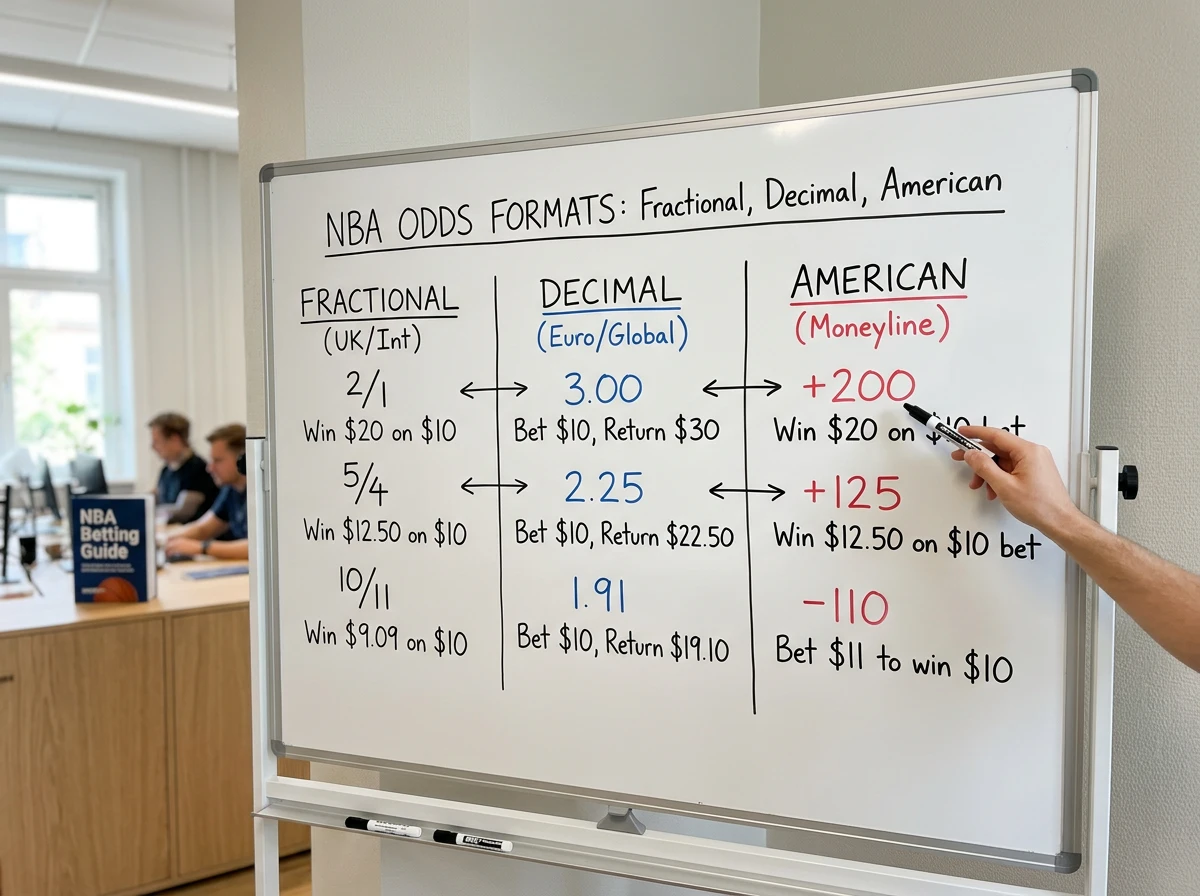
I keep my bet365 account set to decimal odds because the mental arithmetic is fastest when I'm quickly assessing multiple props. But I read American odds fluently now because that's what the best analytical content uses. The dedicated odds guide goes deeper on practical conversion techniques and using implied probability to find value.
Winning Strategy for NBA Player Props
Two seasons ago, I tracked every single NBA prop bet I placed across a four-month stretch. The results taught me more than any betting guide ever could. My points props were profitable. My rebounds props were roughly break-even. My steals and blocks props were bleeding money. Same sport, same league, same analysis approach – wildly different outcomes by category.
The lesson? Strategy isn't one-size-fits-all in prop betting. Different market types require different approaches. But some fundamentals apply universally, and that's what we'll cover here. For the deep tactical dive into building complete betting systems, head to the comprehensive strategy guide – this section covers the essential concepts every UK prop bettor needs.
Most days, the largest betting edges identified by sophisticated models belong to player prop bets rather than traditional moneylines, spreads, or totals. There's virtually always value to be found if you know what to look for. The key insight is that sportsbooks have less data and expertise pricing player props compared to game lines, which creates opportunities for bettors who do their homework.
For game betting, bookmakers have decades of modelling sophistication, massive datasets, and market efficiency enforced by sharp bettors moving millions of pounds. For player props – particularly exotic props on secondary players – the market is less efficient. Bookmakers have less historical data, sharps focus less attention on these markets, and pricing models are less refined.

Why Minutes Projections Matter Most
If I could give beginning prop bettors only one piece of advice, it would be this: minutes are everything. As one strategy guide author put it perfectly – if you aren't on the court, you can't record stats. Limited opportunities limit players drastically more in basketball than in other sports.
The average NBA game features 48 minutes of regulation play. Starters typically log 32-36 minutes per game, with star players sometimes pushing into the high 30s in competitive matchups. Those minutes directly correlate with prop line settings. A player averaging 20 points on 32 minutes per game isn't going to hit his over if he only plays 24 minutes due to a blowout or foul trouble.
I start every prop analysis by asking: how many minutes will this player realistically play? Factors that affect minutes include game script expectations – is this likely to be competitive or a blowout? – rotation patterns, rest considerations on back-to-backs, and injury status of teammates who might absorb extra minutes if unavailable.
Bookmakers set prop lines based on typical performance. When you can identify situations where minutes will deviate significantly from typical, you've found an edge. A player getting extended run because a teammate is out often smashes his usual numbers. A player likely to sit early in a blowout frequently falls short.
Matchup Analysis Basics
Here's why I love player props more than game betting: traditional spreads require you to predict the outcome of a complex, multi-variable team contest. Player props let you isolate a single favourable matchup. That specificity is powerful.
Matchup analysis starts with defensive ratings. How does tonight's opponent defend the position your player occupies? A point guard facing a team that ranks 28th in defending opposing point guards has a clear statistical tailwind. Conversely, elite defensive teams suppress offensive production across the board.
Pace of play compounds matchup considerations. Two teams playing at a fast pace generate more possessions per game, which means more opportunities for counting stats across the board. A player averaging 22 points against average-paced teams might reasonably expect 25-26 against a fast opponent. Slow, grinding games have the opposite effect.
I maintain a simple spreadsheet tracking team defensive efficiency by position and pace of play rankings. It takes maybe 10 minutes to update weekly and has proven invaluable for quick matchup assessments. The data is freely available from NBA.com and various analytics sites.
Finding Value: Expected Value and Line Shopping
A mate of mine places roughly the same NBA prop bets I do. We discuss picks, share analysis, often land on identical selections. Yet after two seasons, I'm solidly profitable and he's underwater. The difference isn't analysis – it's discipline around execution. He accepts whatever odds appear first. I invest the extra minutes to find the best price every single time.
Expected value – EV – is the mathematical concept that separates long-term winners from long-term losers. Every bet carries a probability of winning and a potential payoff. If the payoff exceeds what the true probability warrants, you have positive expected value. If it doesn't, you're lighting money on fire, just slowly.
Player props have become one of the main targets for sharps – professional bettors – specifically because of the inefficiencies in these markets. Although limits have improved, they remain significantly lower than limits seen on game lines. That's actually good news for recreational bettors: you can get reasonable stakes down on props without being flagged as a sharp the way you might betting £500 on a spread.
| Scenario | Your True Probability | Implied Probability at Odds | Expected Value |
|---|---|---|---|
| LeBron Over 25.5 pts at 1.90 | 55% | 52.6% | +EV (good bet) |
| Curry Over 4.5 threes at 2.10 | 42% | 47.6% | -EV (bad bet) |
| Jokić Double-Double at 1.35 | 75% | 74.1% | Slight +EV |
The formula is straightforward: EV = (Probability of Winning × Potential Profit) – (Probability of Losing × Stake). Positive EV means the bet is mathematically sound over the long run. Negative EV means you're paying more than the outcome is worth.
Line shopping is where theory meets practice. One professional bettor on a popular forum explained it plainly: shopping for the best line, having options is absolutely key. Without the options of moving from worse odds to better odds at different bookmakers, it would be impossible to make this work consistently.
The mechanics are simple. Before placing any prop bet, check odds at your three or four UK bookmaker accounts. The variation can be substantial – I've seen half-point differences on props, which at thin margins can flip a bet from negative to positive EV. Yes, it takes extra minutes. Yes, it's tedious. It's also the clearest edge available to anyone willing to put in the effort.
Understanding implied probability makes line shopping second nature. If bet365 offers LeBron Over 25.5 points at 1.85 (54.1% implied) and Betfair offers 1.95 (51.3% implied), that's a meaningful difference. If your analysis suggests 55% true probability, one is a good bet and one is marginal. The odds and value guide covers these calculations in full practical detail.
UK Gambling Regulation: What NBA Bettors Need to Know
I never thought I'd spend time thinking about gambling regulation until April 2026 hit and suddenly the odds on my favourite props shifted noticeably worse. The Remote Gaming Duty increase from 21% to 40% wasn't some abstract policy change – it directly affected the prices UK bookmakers could offer while maintaining margins.
Understanding UK gambling regulation isn't sexy, but it's essential context for anyone serious about NBA prop betting. The regulatory environment shapes everything from the odds you see to the protections you have when something goes wrong.
The UK Gambling Commission operates under the Gambling Act 2005, overseeing all licensed gambling activity in Britain. Any bookmaker offering services to UK residents must hold a UKGC licence. This ensures standardised responsible gambling tools, clear dispute resolution processes, and legal accountability. The total gross gambling yield of the UK gambling industry excluding lotteries reached £11.5 billion from April 2023 to March 2024, up 5.7% year-on-year. That's a massive, mature, heavily regulated market.
The Remote Gaming Duty increase effective April 2026 represents the biggest regulatory shift in recent memory. Online operators now pay 40% tax on their net gambling revenue, up from 21%. That's a substantial cost increase that bookmakers have to absorb somehow. Some tightened odds across the board. Others reduced promotional spending. A few exited the UK market entirely.
For prop bettors, the practical implications include slightly worse odds on average compared to pre-increase levels, reduced bonus offers and free bet promotions, and some consolidation in the market as smaller operators struggle with the new tax burden. None of this makes prop betting unprofitable – it just means margins are tighter than they were.
Responsible gambling tools mandated by UKGC licensing include deposit limits, loss limits, session time limits, reality checks, self-exclusion options, and access to the national GAMSTOP scheme. I strongly encourage using these tools proactively. Betting should be entertainment with an intellectual challenge, not a source of financial stress.
The regulation deep-dive covers UKGC requirements in full detail, including how licensing affects your protections as a consumer and what to do if you have a dispute with a bookmaker.
Same-Game Parlays: Combining NBA Props
Three years ago, same-game parlays barely existed as a mainstream product. Today, they account for approximately 25-30% of total NBA betting handle at major sportsbooks. That's not a trend – it's a fundamental shift in how people bet basketball. And it's created both opportunity and danger for prop bettors.
An SGP combines multiple selections from the same game into a single bet. All legs must win for the parlay to pay out, but the combined odds are typically higher than betting each selection individually. The appeal is obvious: turn a boring Tuesday night between middling teams into something genuinely exciting by tying several outcomes together.
NBA prop betting has surged in popularity in recent years, and SGPs are driving much of that growth. No longer are bettors restricted to just spreads, moneylines and totals – you can creatively bet almost any type of outcome in any game through player props and same-game parlays. The creative flexibility is unprecedented.
But here's what bookmakers don't advertise: SGP odds are adjusted for correlation. If you combine a team's total points over with their star player's points over, those outcomes are positively correlated – one happening makes the other more likely. Bookmakers reduce the payout to account for this, which eats into your expected value.
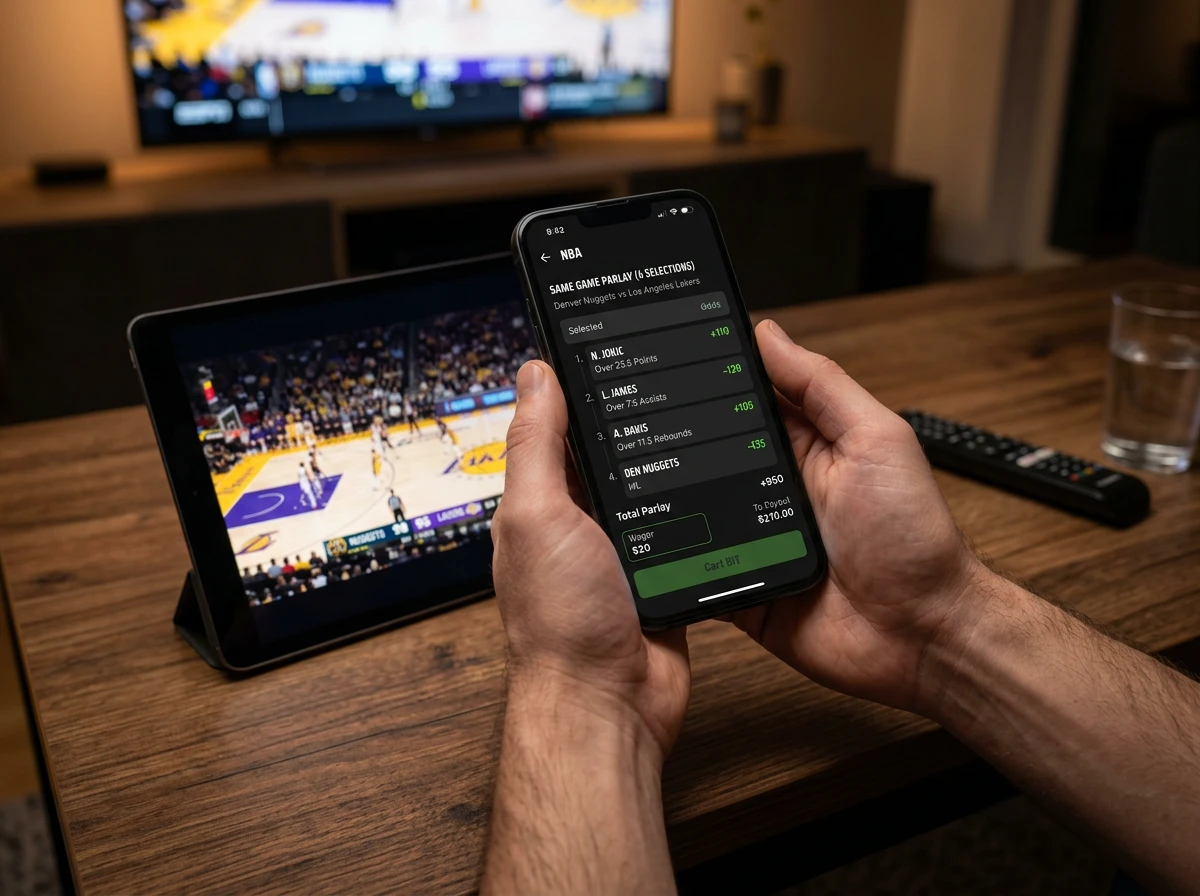
Sharps have actually started targeting SGPs precisely because of market inefficiencies. Player props, especially player prop legs of same-game parlays, have become one of the main targets for sophisticated bettors because of pricing inconsistencies. The correlation adjustments bookmakers apply are often imperfect, creating pockets of value.
UK bookmakers offer SGP functionality under various names. Bet365 calls it Bet Builder. Betfair offers Same Game Multi. William Hill has #YourOdds. The interfaces differ, but the core product is identical: select multiple outcomes from a single game, see combined odds, place one bet.
My approach to SGPs is conservative. I treat them primarily as entertainment bets rather than core strategy. The correlation adjustments and additional complexity make consistent profitability harder than straight prop betting. When I do build SGPs, I focus on genuinely correlated selections where I believe the bookmaker has mispriced the relationship. The SGP strategy guide breaks down correlation mechanics and optimal leg selection in detail.
Injury Rules and Voided Bets
The most sickening feeling in prop betting isn't losing a close one – it's watching your player limp off the court in the first quarter knowing your money is now at the mercy of void rules you probably didn't read carefully enough. I learned this lesson the hard way when a starter got injured at the four-minute mark and my "easy" over never had a chance.
Different UK bookmakers handle injured player scenarios differently, and understanding these rules before you bet can save considerable frustration. The key question is always: under what circumstances does a prop bet get voided versus settled as a loss?
Most bookmakers apply a minimum participation threshold. If a player records at least one statistical event in the relevant category, the bet typically stands regardless of how long they played. So if your points over bet is on a player who scores 2 points before leaving injured, you've lost – the bet isn't voided.
However, if a player is ruled out before the game starts and never takes the court, prop bets on that player are almost universally voided and stakes returned. The tricky cases involve players who are game-time decisions, play minimal minutes, or leave early due to injury.
Specific rules vary significantly by bookmaker. Some require minimum minutes played – typically 15-20 minutes – for the bet to stand. Others settle based on any participation regardless of duration. A few have specific provisions for players injured in the first quarter versus later in the game.
My practice is straightforward: before placing any prop bet, I check the bookmaker's specific settlement rules for player props. This information is always available in the terms and conditions or help sections. It takes 30 seconds and can save real money when edge cases occur.
DNP scenarios – did not play – are cleaner. If a player is scratched from the lineup and doesn't participate at all, the bet voids. But be careful with late scratches: if you've already placed your bet and news breaks after, the bet may have already been accepted under terms that don't favour you. I try to place prop bets as close to tipoff as possible to minimise late-scratch risk.
Do NBA Props Include Overtime?
I once sweated a LeBron James points over through four quarters of regulation, watching him sit at exactly the line with seconds left. Then the game went to overtime. He scored 6 more points. I'd won, but only because overtime counted – and until that moment, I hadn't actually confirmed that it would.
The standard rule across virtually all UK bookmakers: yes, NBA player props include overtime unless specifically stated otherwise. The average NBA game features 48 minutes of regulation play, but that 48 minutes is only the starting point. Overtime periods – each lasting 5 minutes – count toward all standard player props.
This has significant implications for your betting. Overtime benefits over bets by providing extra playing time and extra statistical opportunities. A player who's sitting at 24 points when their over line was 24.5 gets another chance in OT. Conversely, overtime creates additional risk for under bettors who thought they'd safely cleared their line at the end of regulation.
Certain games have higher overtime probability. Close matchups between evenly-matched teams. Games with strong defensive identities where scoring is suppressed. Rivalry games with extra intensity. I factor this into my prop analysis – if a game seems likely to stay tight, over props become relatively more attractive because of the OT upside.
The exception to the overtime rule involves quarter-specific or half-specific props. First-quarter points, first-half rebounds – these are settled based on that specific period only, and overtime doesn't factor in. Make sure you understand which market you're betting. A "game points" prop includes OT; a "first-half points" prop obviously doesn't.
Some bookmakers offer alternate props specifically excluding overtime, though these are less common in UK markets than in the US. If you want to bet on regulation performance only, look for markets explicitly labelled as such. Otherwise, assume overtime counts and adjust your analysis accordingly.
Live NBA Prop Betting in the UK
The first time I placed a live prop bet, I was watching a game where the starting centre picked up two early fouls and headed to the bench. His rebounds line had been set at 9.5 pre-game. Suddenly, with reduced expected minutes, the live line dropped to 6.5. I hammered the under and cashed easily. That experience converted me to live betting's potential.
Live betting – also called in-play betting – has exploded across sports betting generally. It constituted 62.35% of the US online sports wagering market in 2025, with projections showing continued growth through 2031. During major events, the numbers are even more striking: one major sportsbook reported that live wagers made up over 70% of total betting handle on UEFA Champions League knockout games.
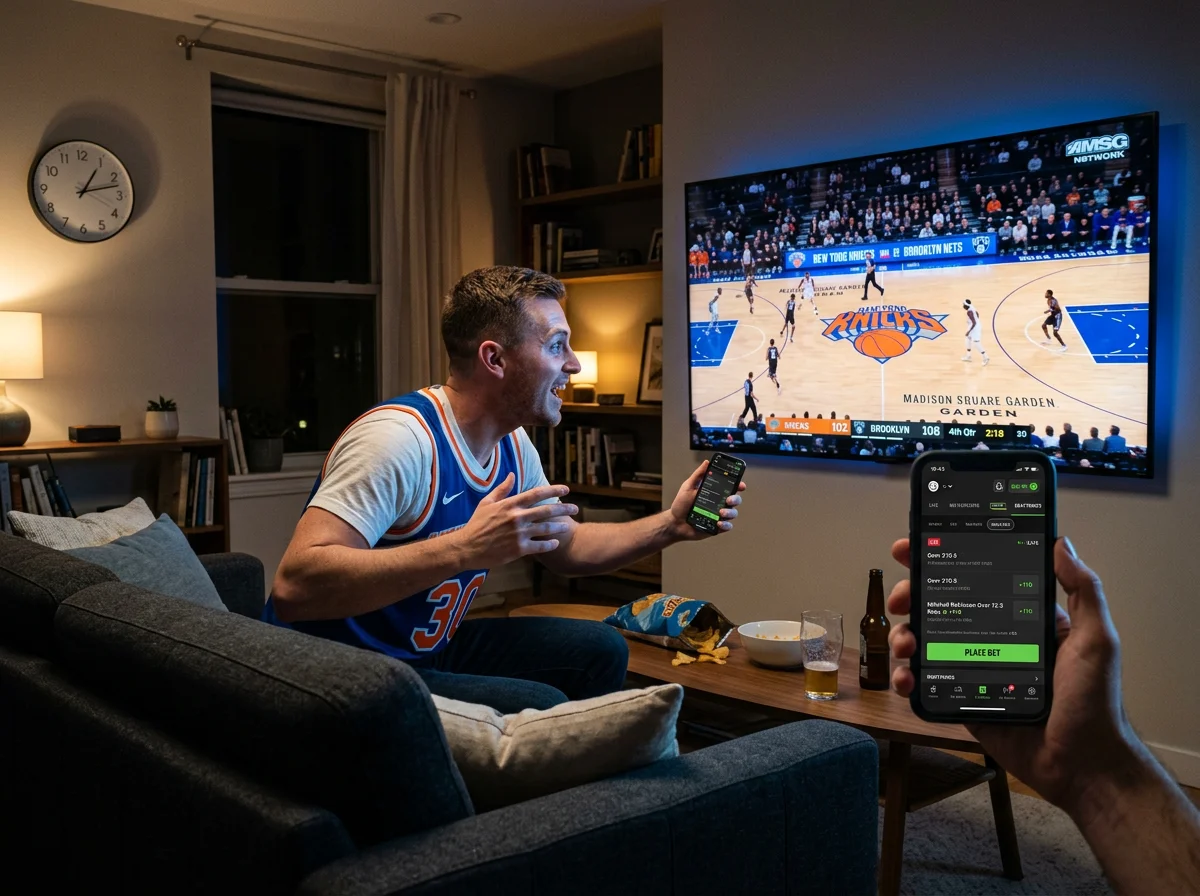
For NBA props specifically, live betting offers a different kind of edge than pre-game analysis. You're no longer projecting what might happen – you're reacting to what is happening. A player who normally scores 25 points but has only 4 through the first quarter will have a significantly adjusted live line. Is he cold, or is he about to heat up? Is the defensive scheme specifically neutralising him, or has he just missed open looks?
UK bookmakers vary significantly in their live prop offerings. Bet365 maintains extensive in-play markets for NBA games, including player props that update throughout the action. Betfair's sportsbook offers similar functionality. William Hill and Betway provide live props for marquee games but may have more limited markets for lower-profile matchups.
Timing matters enormously in live betting. Lines move quickly when significant events occur – injuries, foul trouble, blowouts developing. The window to capture value can be seconds, not minutes. I keep multiple bookmaker apps open during games I'm watching so I can compare live lines and act quickly when I see an opportunity.
Live betting demands different discipline than pre-game betting. The pace can be addictive, and the temptation to chase losses or bet impulsively on whatever market is available is real. I set strict session limits for live betting and stick to situations where I have genuine conviction based on what I'm observing in the game. The live betting guide covers timing strategies and risk management in comprehensive detail.
Frequently Asked Questions
What are NBA player prop bets?
Player prop bets are wagers on individual player statistical performances rather than game outcomes. Instead of betting on which team wins or the total score, you bet on whether a specific player will go over or under a set number for a particular statistic – points scored, rebounds grabbed, assists recorded, three-pointers made, and many other categories. Props allow you to focus on matchups you understand well without needing to predict the broader game result.
What types of NBA player props can I bet on?
UK bookmakers offer extensive prop markets including points, rebounds, assists, three-pointers made, steals, blocks, and turnovers as individual categories. Combination props include PRA (points plus rebounds plus assists), P+R, P+A, and R+A totals. Milestone props cover double-doubles and triple-doubles. Some bookmakers also offer first-quarter or first-half specific props, alternate lines at different odds, and exotic markets like player matchup props comparing two competitors directly.
What happens to my prop bet if a player gets injured?
If a player is ruled out before the game and never participates, prop bets are typically voided with stakes returned. If a player takes the court but leaves due to injury, rules vary by bookmaker – some void bets if minimum minutes aren't reached, while others settle based on any participation. Always check your bookmaker's specific settlement rules for player props before betting, as the handling of mid-game injuries differs significantly across operators.
Do NBA player props include overtime?
Yes, standard NBA player props at UK bookmakers include overtime unless specifically stated otherwise. Any statistics accumulated during overtime periods count toward settling your bet. This benefits over bettors by providing additional opportunity and creates risk for under bettors who thought they'd cleared their line in regulation. Quarter-specific or half-specific props are the exception – these settle based on that period only.
What is a PRA prop bet in basketball?
PRA stands for Points plus Rebounds plus Assists – a combination prop that adds all three statistical categories together for a single over/under line. For a star player who might have lines of 25 points, 8 rebounds, and 7 assists individually, the PRA line would typically be around 40-42 combined. PRA props are popular because combining categories reduces the volatility of any single stat – a quiet scoring night can be offset by extra boards or assists.
How do I find the best value on NBA player props?
Finding value requires comparing your assessment of true probability against the odds offered. Start with thorough research – minutes projections, matchup analysis, situational factors. Then shop lines across multiple UK bookmakers, as odds vary meaningfully between operators. Calculate implied probability from the odds and compare to your estimated true probability. If your analysis suggests higher likelihood than the odds imply, you've potentially found value. Maintain multiple bookmaker accounts to maximise line shopping opportunities.
Which UK bookmakers offer the most NBA player props?
Betfair consistently leads for NBA prop market depth, with industry observers noting it as the go-to site for comprehensive player prop coverage – if you cannot find a prop bet there, it likely doesn't exist. Bet365 offers extensive markets with a polished mobile experience. William Hill and Betway provide solid coverage for mainstream props. For best results, maintain accounts at several bookmakers to access the widest market selection and enable line shopping.
Your Edge Starts With Understanding Variance
After everything covered in this guide – the market types, UK bookmaker options, odds formats, strategy foundations, value concepts, regulations, SGPs, injury rules, overtime implications, and live betting – I want to leave you with the most important mindset shift for any aspiring prop bettor.
The most difficult aspect of player props for new bettors to understand is that you will lose. You'll lose a lot. It isn't about winning every play. It's about making money over the long run. There's a ton of variance in sports, and a loss doesn't necessarily mean it was a bad pick.
That wisdom took me longer to internalise than any analytical concept. A perfectly researched, positive expected value bet can lose. In fact, it will lose sometimes – that's what probability means. The goal isn't prediction accuracy on individual bets. The goal is systematic edge across hundreds or thousands of wagers.
UK punters have genuine advantages in this space. Regulated, competitive bookmakers. Consumer protections from UKGC licensing. Multiple operators to shop lines across. Access to both exchange betting and traditional sportsbook markets. Don't take these for granted – American bettors envy our market structure.
Start small. Track everything. Focus on understanding rather than immediate profit. Build your knowledge of specific players and teams rather than spreading attention across the entire league. Use the deep-dive guides linked throughout this article to develop expertise in areas that match your interests – whether that's systematic strategy, odds and value analysis, same-game parlay construction, or live betting tactics.
The 2025-26 NBA season offers over 1,000 prop betting opportunities every single day. That's not overwhelming – it's liberating. You don't need to bet everything. You need to bet smartly on the opportunities where your analysis gives you genuine confidence. Quality over quantity, always.
Articles
Created by the "Best Player Prop Bets NBA" editorial team.
